Blog

October 22, 2026

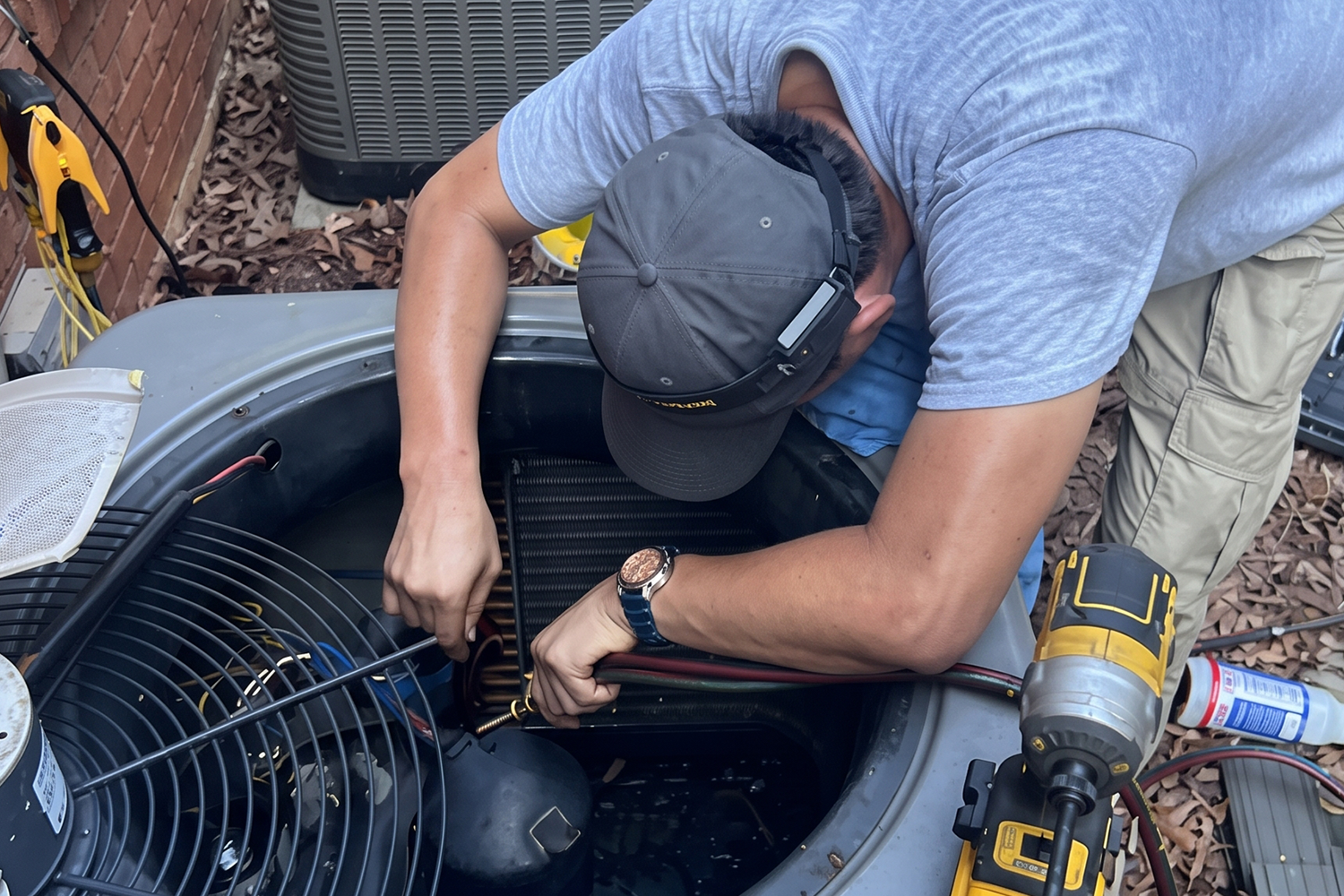
When outdoor temperatures across North Atlanta climb into the 90s, the last thing any homeowner expects to see on their air conditioner is a layer of thick, solid ice. Finding frost or ice covering your outdoor copper refrigerant lines or indoor air handler during a July heatwave feels like a paradox.
However, a frozen AC unit is one of the most common mid-summer emergency calls received by technicians in Alpharetta, Roswell, Johns Creek, and Cumming.
Understanding why your air conditioner transforms into a block of ice—and knowing the exact steps to take—can prevent permanent compressor failure and save you thousands of dollars in emergency replacement costs.
Your air conditioner doesn't produce cold air; it extracts heat. Cold refrigerant travels through your indoor evaporator coil, while the blower fan pulls warm room air over those coils. The heat in your air transfers to the cold refrigerant, cooling your home while keeping the coil's surface temperature comfortably above freezing.
If something disrupts this continuous heat exchange, the temperature of the refrigerant inside the coil drops below 32°F. Ambient humidity in the air condenses onto the freezing copper metal and instantly turns to ice. Once ice starts forming, it insulates the coil further, restricting airflow and triggering a rapid snowball effect until the entire unit freezes solid.
The single most common culprit behind a frozen system is a heavily clogged air filter. When a filter is caked with dust, pet hair, or pollen, warm air cannot reach the evaporator coil. Without warm air to absorb, the coil temperature drops below freezing, turning trapped humidity into ice.
Refrigerant does not wear out or get "used up" over time. If your system is low on refrigerant, there is a physical leak somewhere in your copper line set or coils. Low refrigerant creates a pressure drop inside the system, which causes the remaining refrigerant to expand at an unnaturally cold temperature, freezing any condensation on contact.
Closing supply vents in unused rooms to "save energy" is a common mistake. Central HVAC systems are engineered to operate with precise airflow pressure. Closing off multiple vents or blocking return grilles with heavy furniture chokes the system's airflow, leading directly to coil freezing.
Over time, layer dust and grime can settle on the indoor evaporator coil. This layer acts as an insulator, blocking thermal transfer. Similarly, if the indoor blower fan motor fails or slows down, warm air stops moving across the coil, causing immediate ice buildup.
If you spot ice on your indoor air handler or outdoor copper lines, take these immediate steps to mitigate system damage: